12 October 2011

Man Coasters - An Adventure in Coaster Making - October 2011

So, Justin is prayer leader of the church's men's ministry and has decided that he wants to host a few events, including a breakfast (upcoming).  One of the things I realized is that we don't have enough coasters for the number of guys they want to have in attendance.  With this in mind I grabbed my yarn and a Tunisian crochet hook and got cracking.  I have only made 8 squares and 1 circle so far, but there will be more (for future events).  The circle one was an experiment to see how it would work out.


For the circle, (round 1) chain 5, slip stitch together, (round 2) chain 3, through the center double crochet 14, connect with slip stitch, (round 3) chain 3, double crochet 22 [increase evenly throughout the round each time], connect with slip stitch, (round 4) chain 3, double crochet 32, connect with slip stitch, (round 5) chain 3, double crochet 42, connect with slip stitch, (round 6) chain 3, double crochet 54, connect with slip stitch, cut yarn, tie in ends.

For the squares, use the basic Tunisian stitch.  It is 20 stitches across and 18 vertical bars (rows) plus the casting off row.

I hope this inspired you today!

Blessings!!!!

11 October 2011

Knit Needle Storage and Organizer! - October 2011

I found a crochet hook organizer at the yarn shop in town and I LOVED IT!  So... I took the idea and expanded... quite literally... for knitting needles.  Here's MY pattern for making a DIY hook/needle organizer.

First, cut out the material.  You'll need enough lengthwise to set your needle or hook in the middle with the bottom folded up and the top folded down and still have some overlap (about 3 inches) and enough widthwise for each of your needle pairs or hooks to have about 1/2" to 1 1/2" of space side to side.  Also, you'll need two strips for ties, about 14 inches in length and 3 to 4 inches wide.


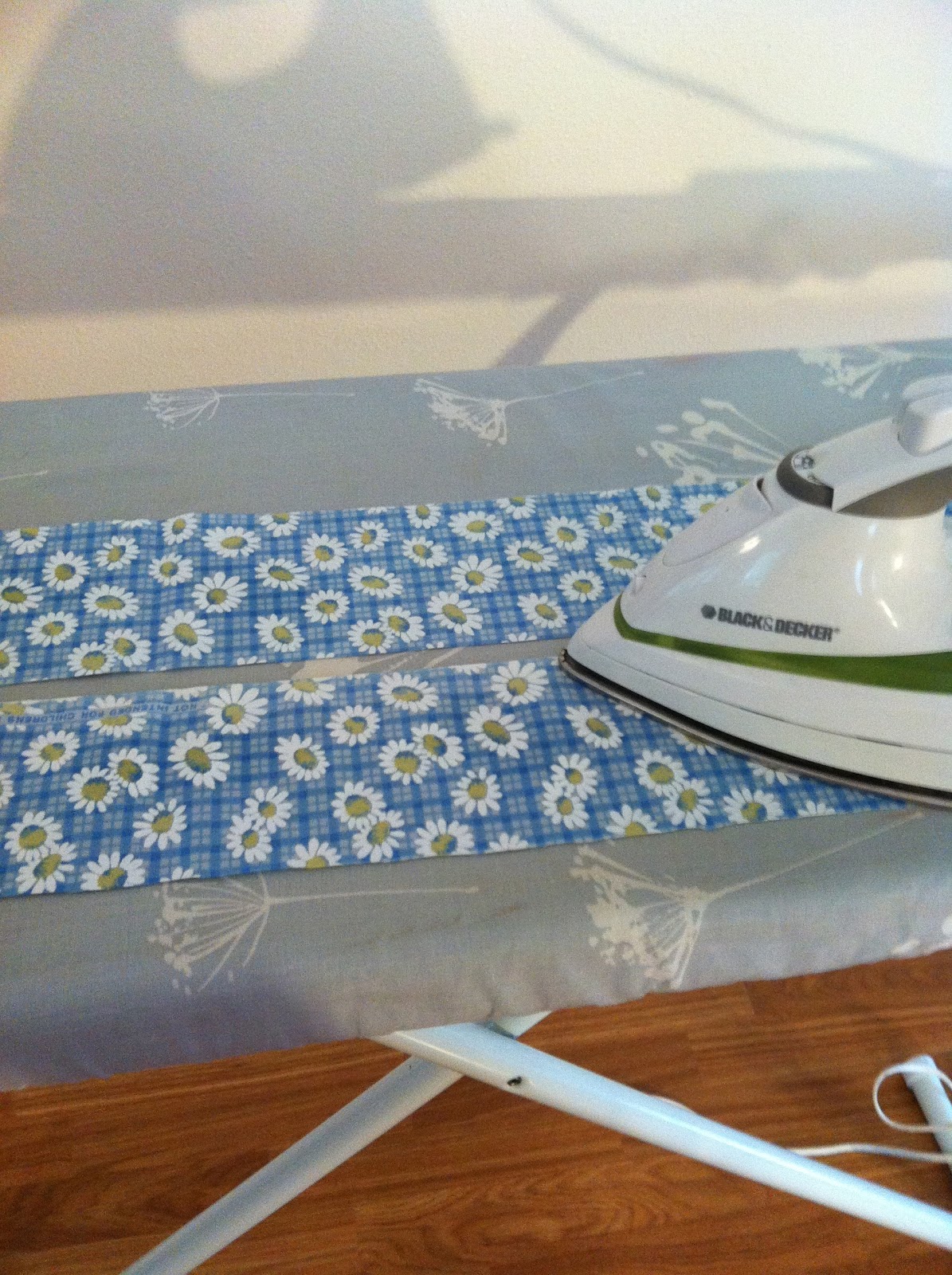
First, iron out the two tie strips.  (Tip: use water to make and keep crisp creases.)  This will be like the bag handles I have made before, the only difference is one end will be left unsewn and the other end will be sewn because it will be the "free" end.


Iron each tie strip in half (for a midpoint to measure the width of the tie).


Fold out the tie strips and measure the width of the ties from the center (mine were 1" wide ties from 3" wide strips).


The "free" end: trim the edge at an angle then cut a slit along the ironed seam at the middle.  Iron a fold into the end similar to the sides so there are no fringes when it's sewn together.


Extra tip: iron the ties before you sew.  


Sew the ties together along the edges (as close to the edge as you reasonably can).


Now for the body.  Fold the top and crease it twice.


Sew a seam across the top.


Measure the two folds at the top and bottom as folded around the needles/hooks.  Iron the two folds.


Sew the top and bottom creases to give stability.  The sewing should be as close to the edge as possible.


Fold and crease (with iron) the sides twice.  Sew the sides.


Pin the two ties together to one side and sew them on.


Below is a picture of the pre-pocket version.  The sides have not been sewn together, only creased in preparation for the last step.


Measure 1/2" to 1 1/2" (depending on the size of the needle or hook) and mark.  Safety pins will work for this, or fabric markers (or a pencil).  Sew from the bottom to the middle starting on one side, working across the bag to the other side for the pockets.

Once the organizer is sewn together, insert needles or hooks and...


... roll it up!!  Tie the ends to to keep it from unrolling.


Hope you enjoyed this idea!

Blessings!!

07 October 2011

Hot Pads Again - October 2011

I wanted to take a break from the projects I have been working on, and since I found the huge bag of yarn for $5 at the church's thrift shop, doodling seemed like a great idea!  I am super excited about these because this is the first yarn I've worked with in a while that actually shows pattern well!  No, seriously, when I post for the hoodie you'll understand why!  Both of these are so super simple I can't even take credit for the patterns.  So, I'll just list the patterns as patterns and say have fun!


Little Squares Trivet
needle size - 9.00 mm
yarn weight - worsted
gauge - 4x4" 12 st x 13 r
finished size - approximately 10 x 10 "

Using yarn from two skeins (or balls) of yarn, cast on 31 st.  (I used one variegated and one solid.)
Knit 8 rows in garder stitch.  (There should be 31 stitches in each row.)
Set 1:
Row 1: k5, p3, k3, p3, k3, p3, k3, p3, k5
Row 2: k8, p3, k3, p3, k3, p3, k8
Row 3 and 4: repeat row 1 and 2
Set 2:
Row 5: k8, p3, k3, p3, k3, p3, k8
Row 6: k5, p3, k3, p3, k3, p3, k3, p3, k5
Row 7 and 8: repeat rows 5 and 6.

Repeat sets 1 and 2 until approximately 8 3/4" long.
Knit 8 rows in garter stitch
** Last 2 stitches of last knit row, leave on needle:
    Handle: k2, turn
        repeat until there are 10 to 12 rows of handle.  Cut yarn (at least 3"),
        (with tapestry needle) sew handle to body, tie in ends.


Diamond Trivet
needle - 9.00 mm
yarn weight - worsted
gauge - 4x4" - 12 st x 20 r
finished size - approximately 15 x 20" (by diagonals)

Note 1: can make this pattern shorter by using fewer rows.  End on even row.
Note 2: I changed colors on this one because I ran out of maroon yarn.

With yarn from two skeins (or balls) cast on 2 st.
Increasing:
Row 1: inc 1, knit to end, turn  (3 st)
Row 2: inc 1, knit to end, turn  (4 st)
    repeat to row 6  (8 st)
Row 7: inc 1, k2, p1, k4, turn  (9 st)
Row 8: inc 1, k to end, turn  (10 st)
Row 9: inc 1, k2, p to 4 from end, k4, turn  (st in row = row # + 2)
Row 10: inc 1, k to end, turn (st in row = row # + 2)
    repeat rows 9 and 10 until there are 50 stitches on one needle (end on even row # 48).
    (can change yarn here)
Decreasing: 
Row 1: k2tog, k3, p to last 4, k4, turn  (49 st)
Row 2: k2tog, k to end, turn (48 st)
    repeat rows 1 and 2 until there are 2 st on needle.  (decreased st by one on each row)
Last row (without handle): k2tog, cut yarn (3-4"), tie in ends.

Optional handle:
Last row is first handle row: k2, turn
    repeat until there are 10 to 12 handle rows, cut yarn (3-4"), sew handle to body
    (with tapestry needle), tie in ends.

30 September 2011

Athletes! Get A Load of This! Cold Pack Bags - September 2011

So, I've been irritated because of no good solution for cold packs sliding around.  It's a pain to use an ice pack when you need it!  And for all the stuff that's happened in the las couple of months, we've needed ice packs a lot!  

Here's the how-to:

Step one: cut out your material so you can put an ice pack on one quarter of it nicely, and cut out ties.  Here I made four.


Step two: start with the tie.  Iron it and get the folds out.


Step three: iron the tie in half to preserve a crisp crease (you'll need it later).


Step four: iron the (two) ends in so you can sew around them.


Step five: iron the sides in (depending on how wide you cut the ties they can be from 3/4" to 2").

Step six: make sure the ends will sew together well.


Step seven: sew the tie together (end, side, end) to make it look like a small tie-belt.  (I used straight pins to keep my work even.  The material I worked with was terrible about going through the machine.)


Step eight: get the bag material out and iron it smooth.


Step nine: iron a crisp crease in the vertical center of the bag.


Step ten: pin and sew the tie to the bag. (It should be centered where the ice pack will settle.)


Step eleven: pin the tie out of the way.  This will help keep from sewing it somewhere it doesn't belong!


Step twelve: iron the top down to sew a seam.


Step thirteen: sew around the outside (with it right-side-out, this is the first part of a French seam).  This should only be the bottom and one side.  We don't want to sew it shut!


Step fourteen: turn the bag inside-out, iron and sew the second sewing for a French seam.


Voila!  You have made a cold pack bag!


Now all you need to do us insert a cold pack...


... and put it to use!!


I hope this proved helpful to someone!  I know this would have been a handy thing to have after the car accident!

Blessings and Peace!

The Original Reason for Sewing - September 2011


This is the reason I started sewing in the first place... to put patches on my husband's uniforms.  Isn't it amazing how things blossom from such a simple inspiration!


Blessings and Peace!!

Scarf, A Side Pattern - Sept 2011

The whole purpose for this scarf was to use some yarn I found at the church's thrift store.  The pastor's wife wanted to have a thrift store for a long time and finally opened it about a year ago.  People bring in donations, she sorts through them, prices them, and sells them to people who come in looking for stuff.  She has mostly clothing, but also a lot of other stuff, too.  I happened to come in at the right time to buy this partial skein, from her, then later a lady donated a big bag of yarn (which I also bought for $5!) and knitting needles... needless to say I have more yarn and knitting needles than I know what to do with!  Now if only I could find enough crochet hooks and Tunisian crochet hooks to finish those sets!  (I'm still missing a few sizes of knitting needles, but I have soooooo many I don't know what sizes I'm actually missing yet!)


This is a pattern I found in one of my Knitting Made Easy books (I only have two).  It's super simple!  But since I don't want to copy write the pattern, I'll cite the book!

Knitting Made Easy
Beginner Basics, Illustrated Stitches, Updated Techniques
Featuring Red Heart Yarns - www.redheart.com
Distributed in the USA by Coats and Clark, Greer, SC 29650 

Blessings and Peace!

26 September 2011

Bags: An Official Pattern - August 2011

Okay, this project (yes, I know, two bags but one project) was inspired by a conversation I had with a clerk at our local yarn shop.  She complimented the bags I brought in for shopping, so I told her about them.  Turns out she was one of the manager/owners of the yarn shop and offered to work with me, if I wanted to make sample products with their yarn and write up a pattern they would sell the pattern for me at the yarn shop!  NEAT!  So... I got busy with making the samples and am now working on the patterns.  These are the first drafts, I'm still working with test crocheters.  (If you're interested, test the pattern and leave a comment!  [note: google accounts are FREE!!!!])


Hook - H (5.00mm)
Weight - Worsted
Gauge - 4x4” ~  13 st x 8.5 rows
Finished size ~ 19.5” wide x 12” tall
Note 1: This project is worked in the round (starting in Row 3) with connecting at the end of each round.
Note 2:  May need to go down a hook size if you crochet loosely.

- CA
Row 1: ch 63
Row 2: dc in fourth chain from hook and each chain after to end. (60 dc).
Row 3: (worked in the round) ch 3 (counts as first dc), dc in second st of previous row and each st to end, dc 2 more in first corner (last st of previous row), dc 3 in first st of opposite side, dc in second st of previous row and each st to end, dc 2 more in third corner (last st of previous row), dc 3 in first st of opposite side, sl st to beg of Row 3. (130 dc)
Row 4-8: (do not turn) ch 3, dc in second st from previous row to end, connect with sl st. (130 dc)
- change yarn CB
Row 9-23: ch 3, dc in second st from previous row to end, connect with sl st. (130 dc)
- change yarn CA
Row 24-26: ch 3, dc in second st from previous row to end, connect with sl st.  [do NOT cut yarn yet!!] (130 dc)
Handles:
Measure: Flatten bag and measure distance from edge of bag to handle positon (approx 4”), mark distance for the outside of each handle with crochet markers (or safety pins), count 5 st toward the inside of bag and mark inside of handle with crochet markers (or safety pins), should have 8 markers.


Row 1: attach yarn *ch 3, dc in next 4 stitches, turn* repeat for 100 handle rows.
Sew handle on: cut yarn to ~ 4” from hook, straighten (untwist) handle, (may use darning needle or crochet hook) “sew” handle onto bag between markers.

Tie in ends.


Hook - H (5.00mm)
Weight - Worsted
Gauge - 4x4” ~ 16 st x 22 rows  (may use other hook size to attain gauge)
Finished size (body) ~ 21” wide x 12” tall
Note 1: This project is worked in the round (starting in Row 3) with connecting at the end of each round.
Note 2:  May need to go down a hook size if you crochet loosely.

- CA
Row 1: ch 81
Row 2: turn, sc in second ch from hook and each chain after (80 st)
Row 3: (worked in the round) turn, ch 1, sc in each stitch from previous row to end, sc 3 in last stitch from previous row, sc 3 in first stitch of the opposite side, sc in each stitch from previous row to the end, sc 3 in last stitch from previous row, sc 2 in first stitch of previous row (should be at the beginning of Row 3), connect to beginning of Row 3 with sl st.  (170 st)
Row 4-15: (do not turn) ch 2, sc in each st from the row before to end, connect to beginning with sl st. (170 st)
- change yarn CB
Row 16-40: ch 2, sc in each st from row before to end, connect to beginning with sl st. (170 st)
- change yarns CA
Row 41-50: ch 2, sc in each st from row before to end, connect to beginning with sl st. (170 st)
- change yarn CC
Row 51-65: ch 2, sc in each st from row before to end, connect to beginning with sl st. [do NOT cut yarn yet!] (170 st)
Handles:
Measure: Flatten bag and measure distance from edge of bag to handle position (approx 5”), mark distance for the outside of each handle with crochet markers (or safety pins), count 5 st toward the inside of bag and mark inside of handle with crochet markers (or safety pins), should have 8 markers.

Row 1: attach yarn *ch 2, sc in next 5 stitches, turn* repeat for 100 handle rows.
Sew handle on: cut yarn to ~ 4” from hook, straighten (untwist) handle, (may use darning needle or crochet hook) “sew” handle onto bag between markers.

Tie in ends.


Blessings!!

11 September 2011

Little Pink Blanket, Because I Had the Yarn! - August 2011

Soooooo, I wanted to try something new with blankets.  I started at one corner, made the middle wide, and ended at the opposite corner.  The first picture is about half-way finished.  As you can see, though, it didn't exactly come out square.  It's more of a diamond shape than a standard blanket, but it's okay, because that's the way this one worked out.  Besides, who says all blankets have to be squared (or rectangle)?  
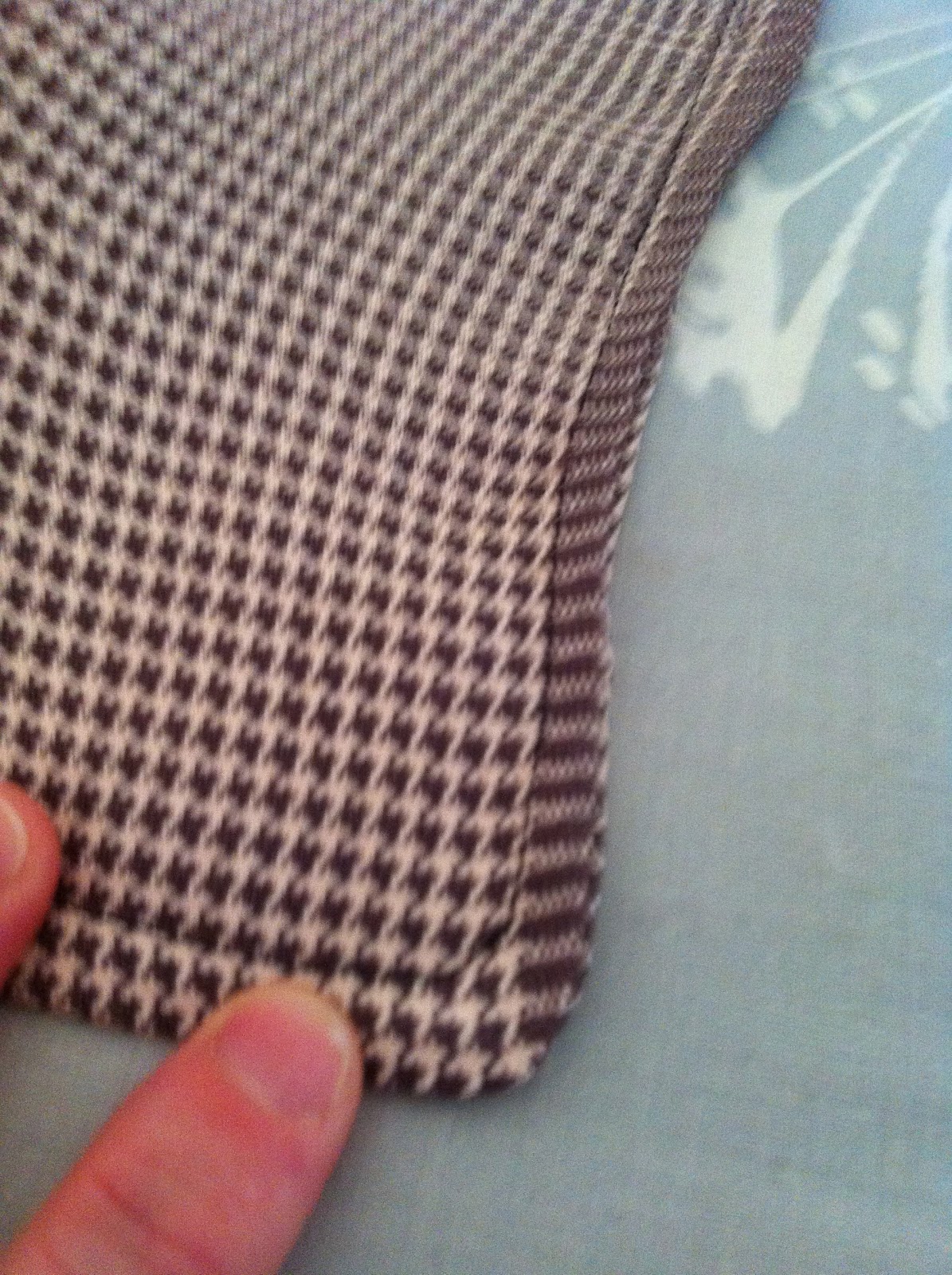
The first stitch was a double stitch and expanded it into a three-stitch shell.  That is basically the pattern.  The second row had 2 shells, the third row had 3 shells, and so forth and so on until it was at its widest point and I started decreasing the rows.  I used a simple double stitch and anchor before I started the first shell of each decreasing row.  If you look in the last picture, my index finger is at the bottom of a shell and my middle finger is at the side of the same shell so you could see the pattern up close.  Each shell (except for the very first one) begins and ends with an anchor from the row before.  It's a really neat stitch.  I hope that whatever little girl receives this blanket enjoys it!

Notes: A shell stitch starts with a double (or triple) crochet stitch and can be expanded to 3 or 5 stitches.  The base of the shell stitch is the first loop made at the base of the first stitch, each subsequent stitch of the shell starts in the same loop.  Each of the side shells are anchored at the bottom in the corner of the shell from the row before.  In rows 2 through the middle, increasing, there is an anchor at the top of each shell from the row before that makes the corner of the current row and the bottom of the next row.  In the middle rows to the end, decreasing, start with a double (or triple) crochet, anchor it at the top of the shell from the previous row, then yarn over (loop the yarn over the crochet hook) once for a double stitch or twice for a triple stitch and anchor at the bottom of the current row like normal.


Love and Blessings!!